Nimzo-Indian Defense: Complete Guide & Variations

The Nimzo-Indian Defense is one of the most respected and theoretically rich chess openings for Black. It begins with the moves 1.d4 Nf6 2.c4 e6 3.Nc3 Bb4, immediately pinning White's knight and challenging the center in an indirect but highly effective way.
Unlike many openings where Black fights for the center with pawns, the Nimzo-Indian uses piece activity from the very first moves. Black's bishop on b4 creates immediate pressure, disrupts White's coordination, and sets up long-term structural advantages.
The opening has been a favorite at the highest level for over a century. Magnus Carlsen, Garry Kasparov, Anatoly Karpov, and Bobby Fischer have all relied on the Nimzo-Indian as a key weapon. It suits players who enjoy complex, strategically rich positions with winning chances for both sides.

Main Ideas in the Nimzo-Indian Defense
The Nimzo-Indian is built around a few central ideas that define Black's strategy throughout the game:
Pinning the knight on c3. With 3...Bb4, Black immediately restrains one of White's most important central defenders. The knight on c3 supports e4 and d5 - by pinning it, Black makes it harder for White to establish a dominant pawn center.
Doubling White's pawns. A key theme is exchanging the bishop for the knight with ...Bxc3+, leaving White with doubled pawns on c3 and c4. These pawns are a long-term weakness that Black can target in the endgame.
Fighting for the center with pieces, not just pawns. Rather than playing ...d5 immediately, Black often delays the central pawn break and first completes development. Moves like ...0-0, ...d6, ...b6, and ...c5 are all common before Black commits to a central pawn structure.
Active piece play. Black's light-squared bishop is often developed to b7 via b6, or to a6 to target c4. The pieces work together to create counterplay even in positions where White has a space advantage.
How to Play the Nimzo-Indian Defense
The Nimzo-Indian Defense arises after: 1.d4 Nf6 2.c4 e6 3.Nc3 Bb4
It is important to note that the move order matters. Black needs White to play 3.Nc3 before committing to 3...Bb4. If White plays 3.Nf3 instead of 3.Nc3, the Nimzo-Indian is not possible and Black must choose a different setup.
After 3...Bb4, White has a wide range of fourth moves. The most important are:
- 4.e3 - Rubinstein Variation (most popular)
- 4.Qc2 - Classical Variation
- 4.a3 - Samisch Variation
- 4.Nf3 - Kasparov Variation
- 4.Bg5 - Leningrad Variation
- 4.f3 - aggressive but less common
Each of these systems leads to a completely different type of game, which is one of the reasons the Nimzo-Indian is so popular - Black can choose which type of position to enter based on personal style.
Rubinstein Variation (4.e3)

The Rubinstein Variation, beginning with 4.e3, is by far the most played system in the Nimzo-Indian at all levels. White's move is solid and flexible - it supports d4, prepares to develop the bishop to d3, and avoids committing the queen early.
The main idea for White is to build a solid center and eventually push for e4, creating a spatial advantage. Black, on the other hand, has multiple ways to respond.
Black's most common responses to 4.e3 are:
- 4...0-0 - castling first before committing to a pawn structure
- 4...c5 - immediately challenging White's center (Huebner Variation)
- 4...b6 - preparing to develop the bishop to b7 (Fischer/Karpov approach)
- 4...d5 - the most direct central challenge
After 4...0-0, the game typically continues 5.Bd3 d5 6.Nf3, reaching one of the main tabiya positions of the Rubinstein.
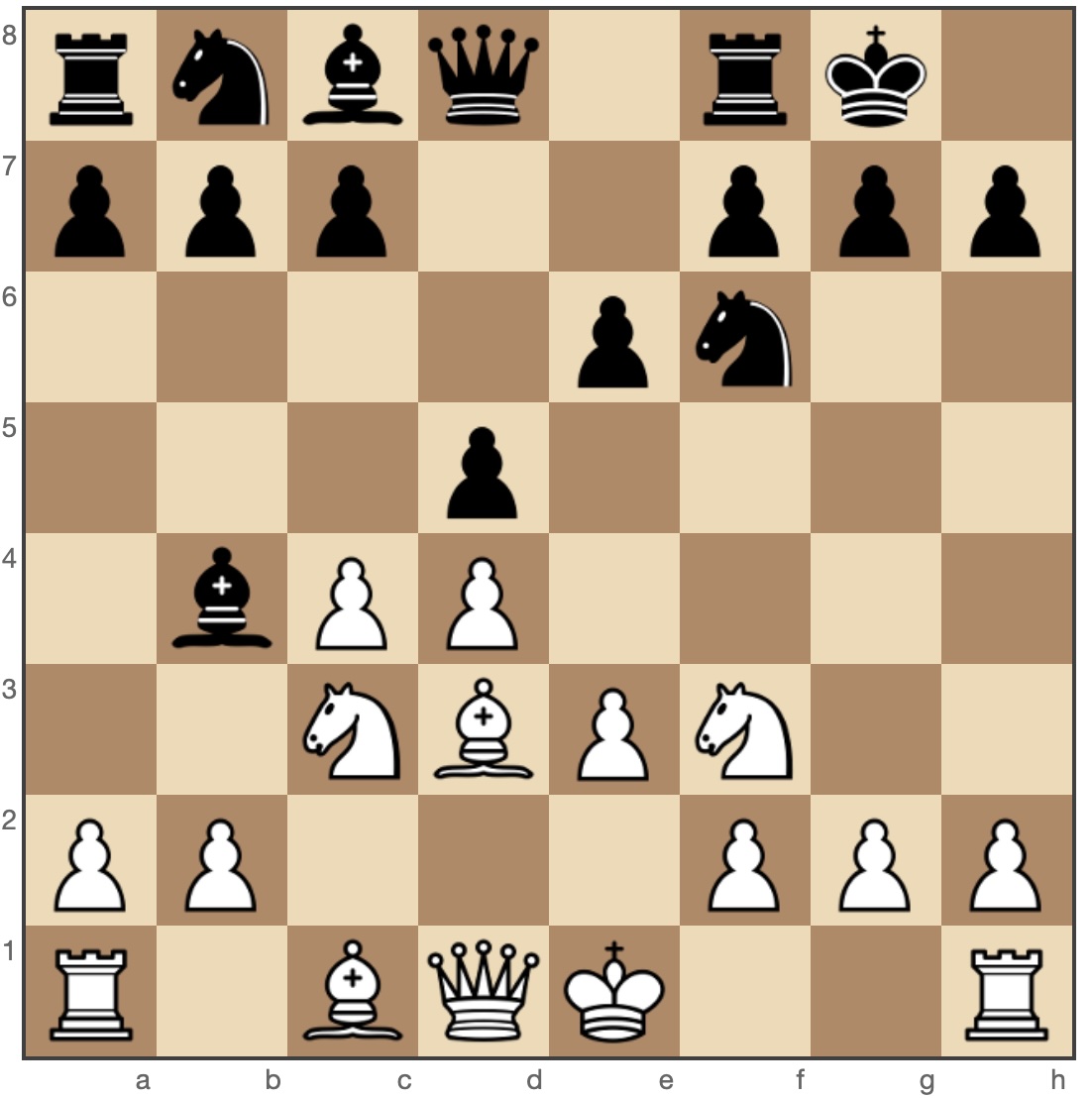
From this position, Black can choose between 6...c5 (the most active, immediately fighting for the center) or 6...Nc6 (developing a piece and keeping options open).
Rubinstein with 4...c5 (Huebner Variation)
After 4.e3 c5, Black immediately attacks the d4 pawn. White usually responds with 5.Bd3, and the game enters sharp territory where both sides fight for the center from very early on.
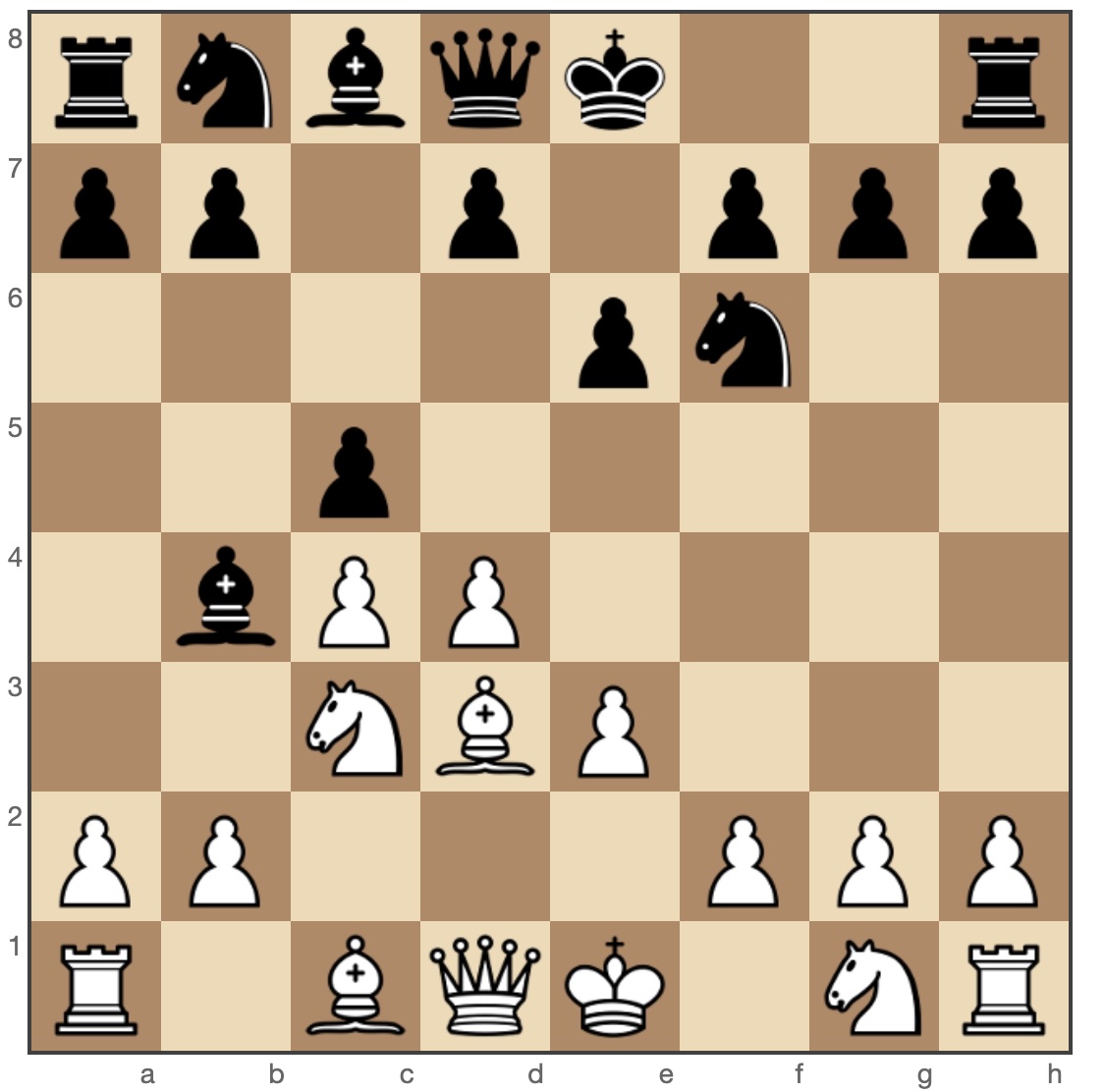
Black's idea is to pressure d4 and, after an eventual ...cxd4, recapture with the pawn and open the c-file for counterplay. This line tends to produce unbalanced positions with chances for both sides.
Rubinstein with 4...b6
The move 4...b6 was popularized by both Karpov and Fischer. Black prepares to develop the light-squared bishop to b7, where it exerts long diagonal pressure on the center and kingside.
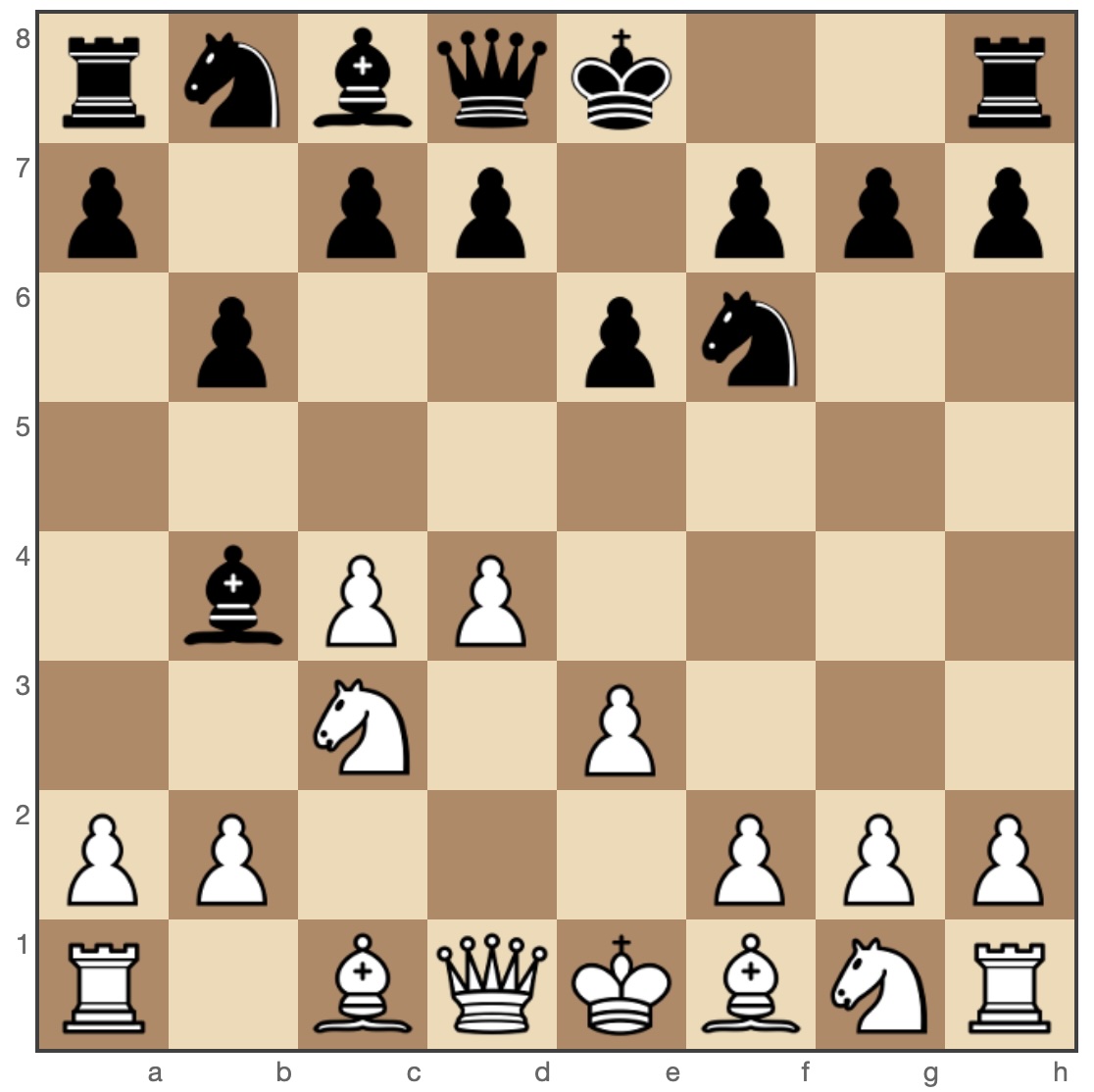
This approach is less confrontational than 4...c5 but leads to rich strategic play. Black often follows up with ...Bb7, ...0-0, and ...d5 or ...Ne4, aiming for a solid but active setup.
Classical Variation (4.Qc2)

The Classical Variation with 4.Qc2, also called the Capablanca Variation, is White's second most popular system. The queen move has a clear purpose: by controlling e4 and preventing Black from doubling the c-pawns, White maintains the bishop pair without structural weaknesses.
The downside is that the queen on c2 is somewhat exposed, and Black can try to exploit this with active piece play.
Black's main responses to 4.Qc2 are:
- 4...0-0 - castling and waiting to see White's setup
- 4...d5 - directly challenging the center
- 4...c5 - an immediate counterattack on d4
- 4...Nc6 - developing and keeping the tension
A very important line arises after 4...0-0 5.a3 Bxc3+ 6.Qxc3. Here Black has given up the bishop pair but obtained the right to play freely in the center.
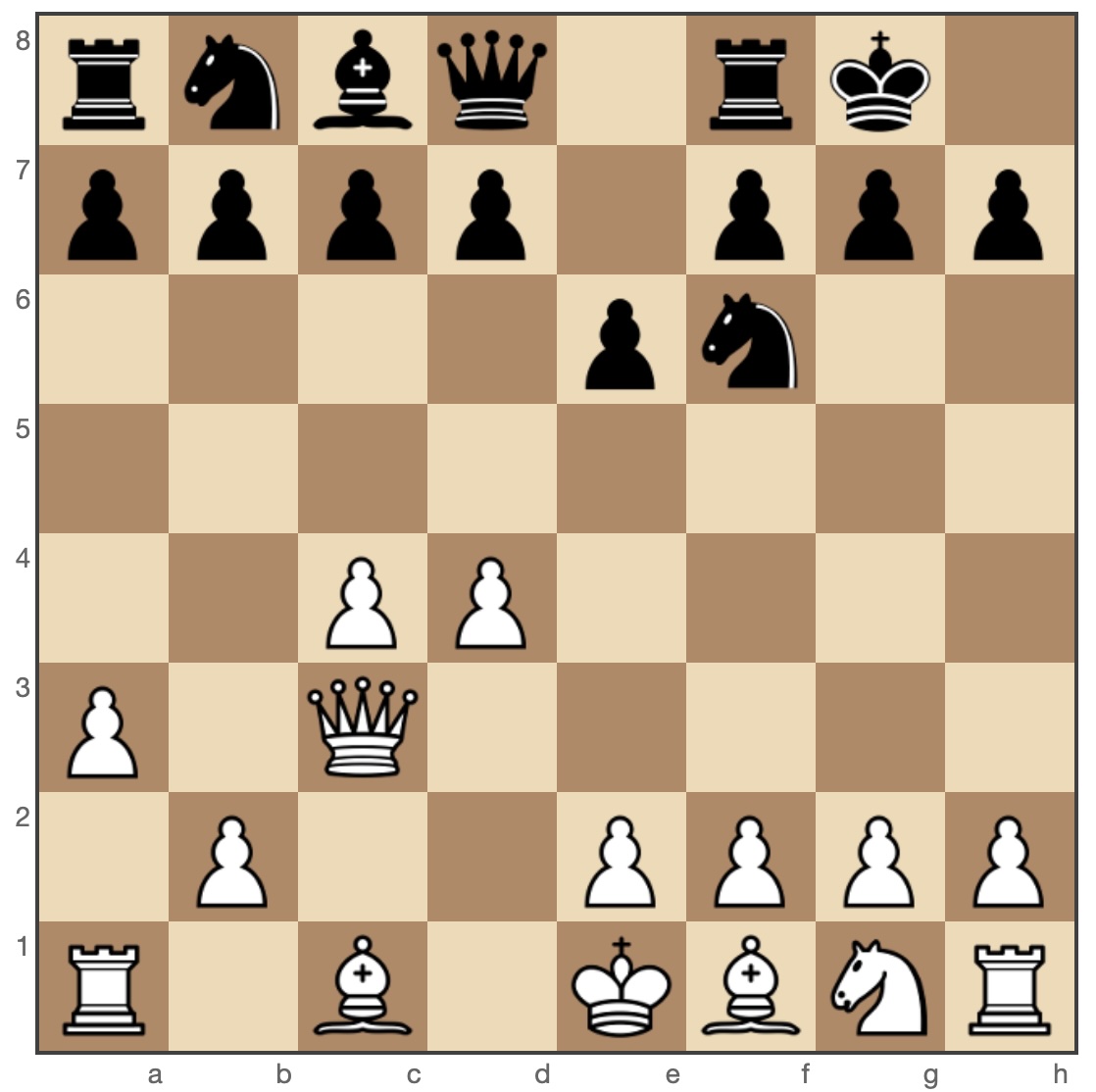
After the exchange, Black typically continues with 6...b6 followed by ...Bb7, building a solid position and preparing ...d6 and ...e5 to fight for the center.
Samisch Variation (4.a3)
The Samisch Variation begins with 4.a3, immediately forcing Black to decide what to do with the bishop. White's idea is straightforward: force ...Bxc3+, recapture with the pawn (bxc3), and then aim for an aggressive center with e4.
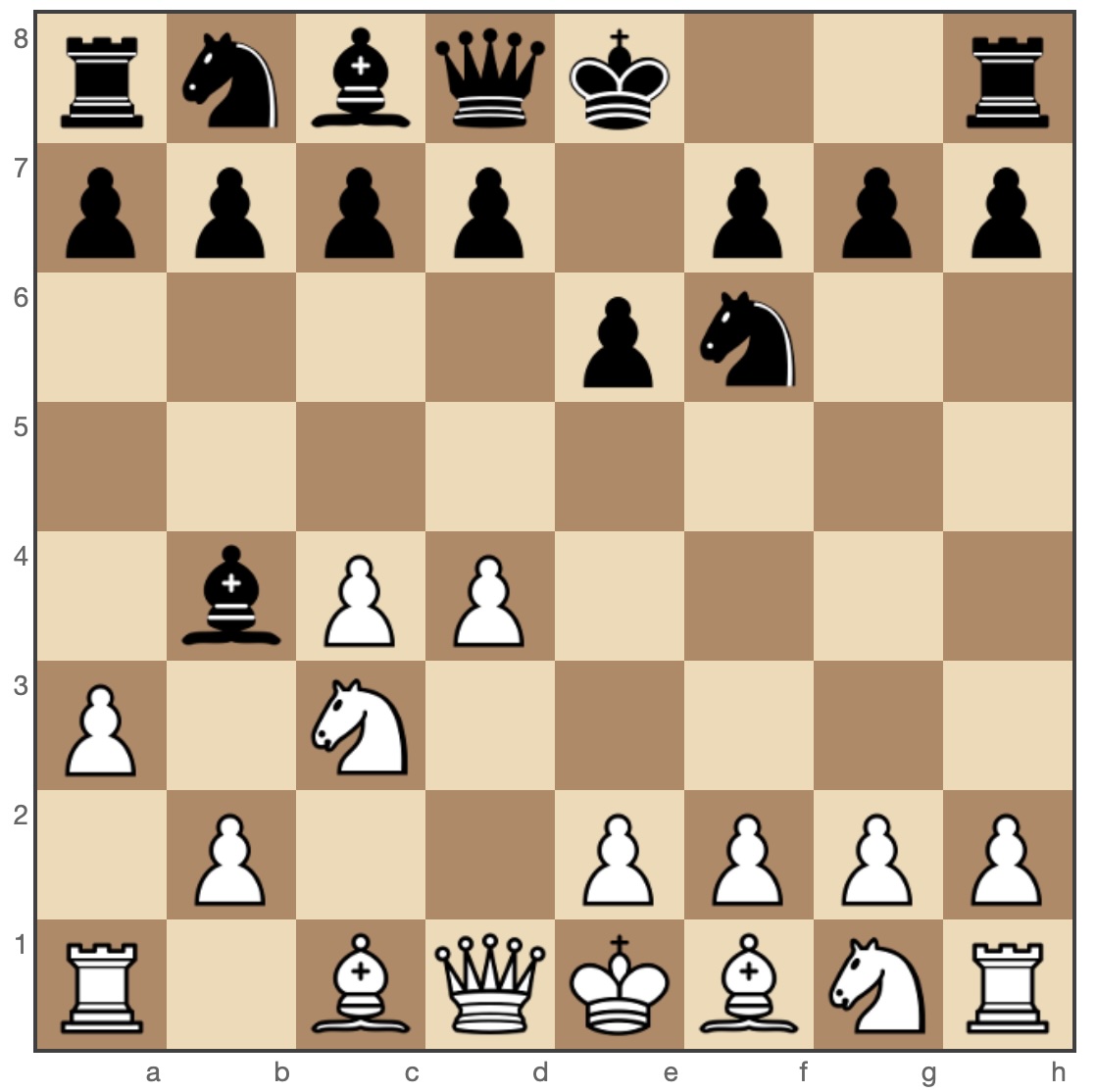
After 4...Bxc3+ 5.bxc3, White has doubled pawns on c3 and c4, but also the bishop pair and a strong pawn center. The position becomes very different from the Rubinstein - more unbalanced and with more direct winning chances for both sides.
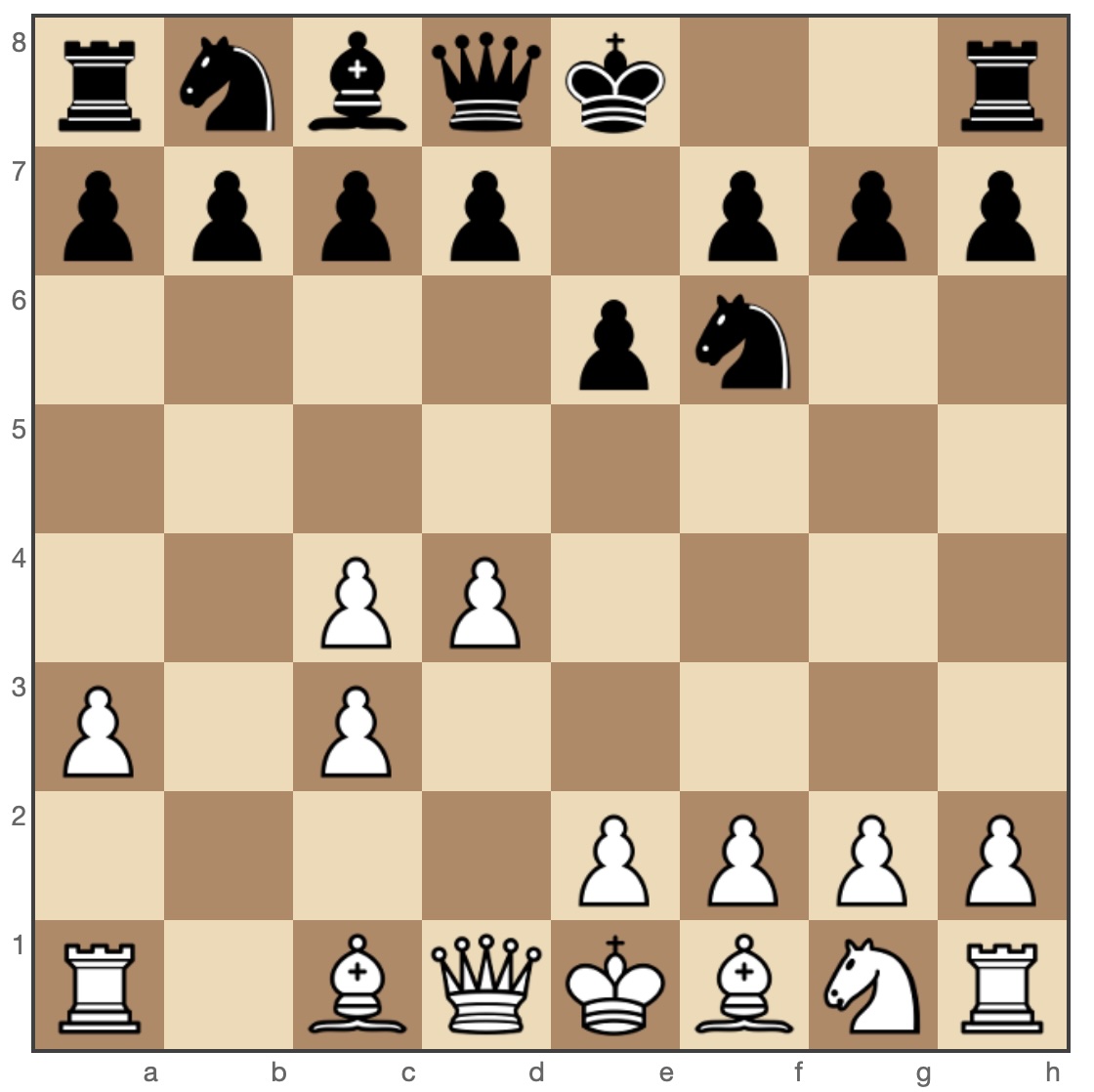
Black's most common responses after 5.bxc3 are 5...c5 (attacking d4 at once) or 5...0-0 followed by ...d6 and ...e5, aiming to close the center and neutralize White's bishop pair.
White's plan in the Samisch is to play Bd3, Ne2, and push f3 followed by e4, creating a powerful pawn center. Black must act quickly on the queenside and in the center before White's position becomes overwhelming.
Kasparov Variation (4.Nf3)

With 4.Nf3, White develops naturally and avoids giving Black a clear target. This was a favorite of Garry Kasparov, who used it to sidestep deep preparation in the main lines.
The move transposes easily into other openings. If Black plays ...d5, the game can transpose into Queen's Gambit structures. If Black plays ...b6 or ...c5, the game stays in Nimzo-Indian territory.
The most common continuation is 4...0-0 5.Bg5, where White pins the knight on f6 and prepares to castle queenside for an attacking game. Black has to be careful not to fall into passive positions.
Leningrad Variation (4.Bg5)

The Leningrad Variation with 4.Bg5 is an aggressive approach where White immediately pins the knight on f6. The idea is to make it harder for Black to control the e4 square and to create kingside pressure.
After 4.Bg5, Black's most reliable response is 4...h6 5.Bh4 c5, immediately fighting back in the center before White establishes too much control.
This line leads to sharp, double-edged positions. Black must be prepared to handle the pin and the potential exchange sacrifice ideas that White can employ on the kingside.
4.f3 Variation

The move 4.f3 is an aggressive attempt to build a massive pawn center with e4. White is willing to lose time to achieve this goal.
Black should respond actively. After 4...d5, Black directly challenges White's center before it gets a chance to expand. Another option is 4...c5, attacking d4 and keeping the position fluid.
The 4.f3 Variation is less popular at the top level because it weakens the e3 square and can lead to positions where Black's active counterplay more than compensates for White's space advantage.
Typical Pawn Structures in the Nimzo-Indian
Understanding the pawn structures that arise from the Nimzo-Indian is essential to playing the opening well. There are two main structures to know:
Structure with doubled c-pawns (White). This appears when Black plays ...Bxc3+. White ends up with pawns on c3 and c4 - they control important squares but the c3 pawn can become a long-term weakness, especially in endgames. Black should aim to trade pieces and reach an endgame where the doubled pawns become a decisive disadvantage.
Structure without doubled pawns. In the Classical Variation (4.Qc2), White avoids the doubled pawns and keeps the bishop pair. Here the game is more symmetrical and strategic. White aims for e4 and a space advantage; Black aims for piece activity and counterplay in the center.
Strategic Plans for Black
Depending on the variation, Black has several recurring plans:
Target the doubled c-pawns. When White has pawns on c3 and c4, Black should avoid simplifications that help White consolidate, and instead keep enough pieces on the board to attack the weak pawns. A rook on the c-file and a knight on e4 are typical weapons.
Control e4. A knight on e4 is extremely powerful in many Nimzo-Indian positions. It dominates the center and is often supported by a bishop on d6 or b4.
Queenside counterplay. With ...b6, ...Bb7, and ...c5, Black can generate pressure on the queenside and the long diagonal. This plan works especially well when White commits to a kingside attack.
Endgame advantage. The doubled pawns on c3/c4 are a long-term structural weakness. If Black can simplify the position while maintaining the structural imbalance, the endgame is often favorable.
Strategic Plans for White
Exploit the bishop pair. In variations where Black captures on c3, White has two bishops against Black's two knights (or bishop and knight). In open positions, the bishop pair is a significant advantage. White should aim to open the position.
Central expansion with e4. White's most common plan is to play Bd3, Ne2 or Nf3, and eventually push e4 to establish a dominant pawn center. Once e4 is achieved, White has more space and can launch kingside attacks.
Queenside pressure. In some lines, especially after Black plays ...c5 and the pawns are traded, White can use the open b-file and the queenside majority to create passed pawns.
Pros and Cons of the Nimzo-Indian Defense
Pros for Black:
- Immediately creates problems for White from move 3
- Leads to rich, complex positions with winning chances
- Flexible - Black can choose from many different setups depending on style
- Excellent at the elite level - used by world champions for over 100 years
- Can force structural weaknesses (doubled pawns) in White's position
Cons / things to watch out for:
- Requires giving up the dark-squared bishop in many lines (which can leave the dark squares weak)
- Deep theory in the main lines - particularly the Rubinstein requires serious study
- If Black plays passively, White's bishop pair and space advantage can become overwhelming
Model Games
Related Chess Courses
Nimzo-Indian Complete Repertoire for White with GM Davorin Kuljasevic
Nimzo-Indian Defense: Repertoire for Black with IM Marcin Sieciechowicz
Win with Nimzo Indian Defense GM Ratkovic
More Chess Articles
Baltic Defense Guide
Albin-Counter Gambit Guide
Marshall Defense Guide
E20 Sub-variants:
- Nimzo-Indian defence
1. d4 Nf6 2. c4 e6 3. Nc3 Bb4 - Nimzo-Indian, Kmoch variation
1. d4 Nf6 2. c4 e6 3. Nc3 Bb4 4. f3 - Nimzo-Indian, Mikenas attack
1. d4 Nf6 2. c4 e6 3. Nc3 Bb4 4. Qd3 - Nimzo-Indian, Romanishin-Kasparov (Steiner) system
1. d4 Nf6 2. c4 e6 3. Nc3 Bb4 4. g3